Applications
From assumptions to measured reality in rail track stability.
Understanding how track stability evolves in reality.
Railways are designed with precision, but stability in the field is conditional.
A rail track is part of a broader system that includes ballast, subgrade, embankments, soil conditions, and water behavior. Each of these elements responds differently to stress, and their interaction determines how the track behaves over time. Changes such as rainfall, soil movement, or nearby construction do not always lead to immediate failure. More often, they result in gradual deformation, developing across multiple dimensions and over longer periods.
Traditional monitoring methods provide valuable information, but they often capture only moments in time or partial signals. This makes it difficult to understand how displacement evolves, and whether a situation is stable or deteriorating.

Early detection of track movement.
Detect millimeter-scale movements in track beds before they escalate into operational disruptions, speed restrictions, or safety incidents.
Safer operations & reduced site visits.
Predictive maintenance & cost efficiency.
Lower liability and risk exposure.
Our solutions
Continuous monitoring, directly on the track.
Basetime provides monitoring solutions that focus on measuring how rail infrastructure behaves in reality, rather than approximating it through indirect methods.
For short-term situations, such as construction activities near active tracks, project-based monitoring provides insight into how external influences affect track stability.
For long-term applications, permanent installations enable continuous observation over extended periods.
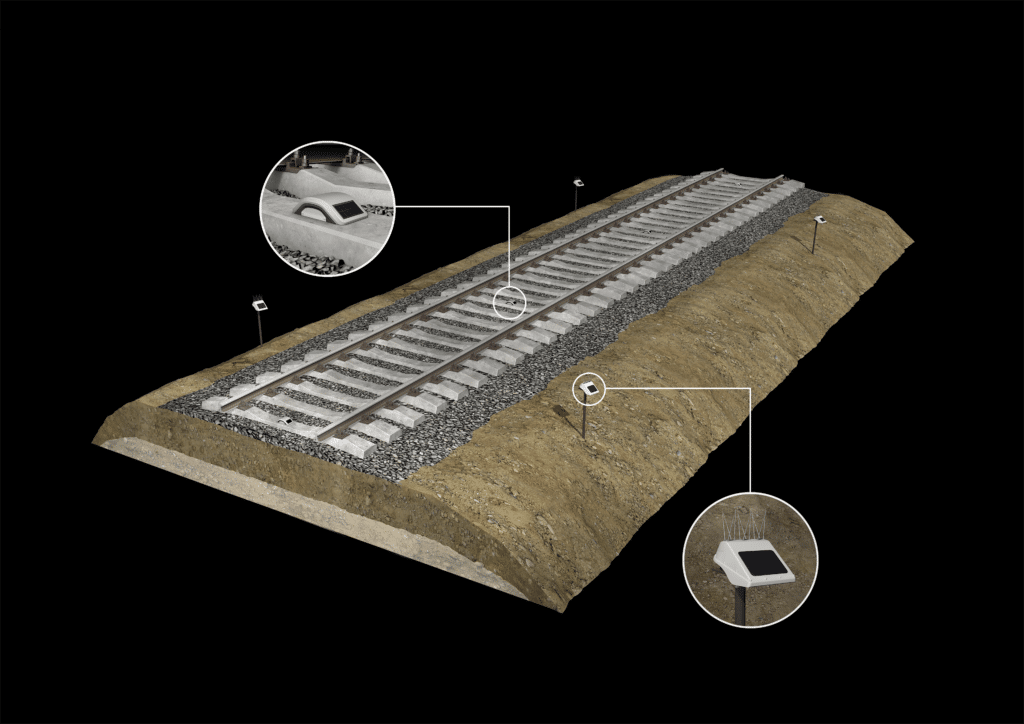
By placing GNSS devices directly on sleepers and combining them with tilt sensing, the system measures displacement and rotation in three dimensions. This makes it possible to distinguish between different types of movement, such as settlement, lateral displacement, and rotational effects.
Project-based monitoring
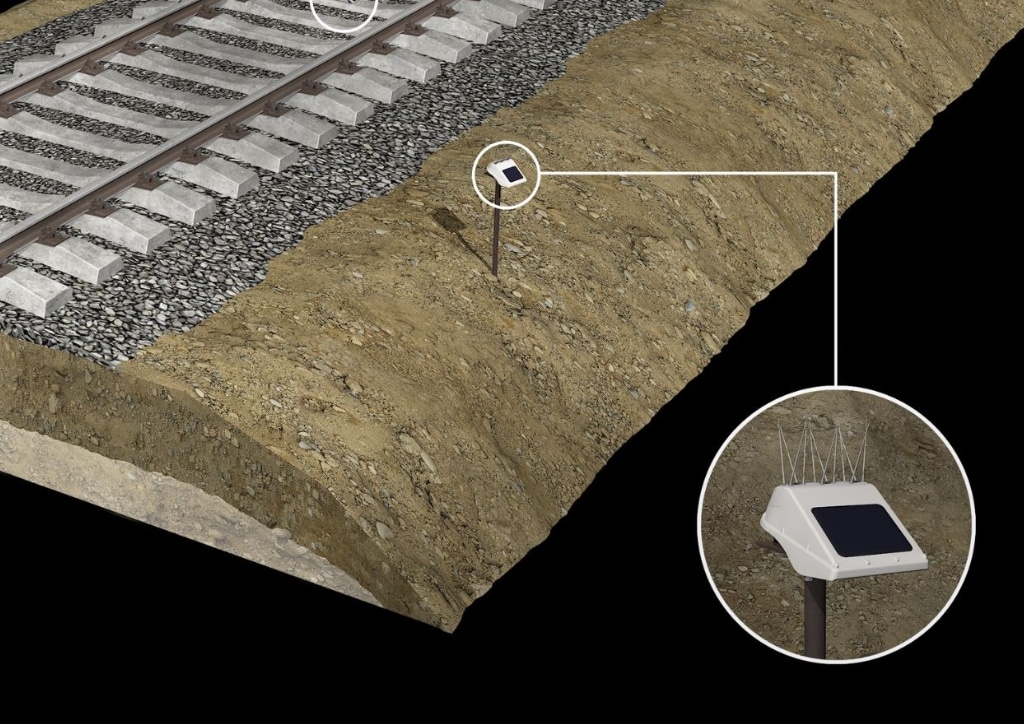
Autonomous GNSS and radar monitoring for temporary situations, providing insight into trackbed behavior during nearby construction works.

Continuous long-term monitoring
Permanent GNSS and tilt-based monitoring installed on the track (gluing or bolting), delivering continuous insight into displacement and rotation.
Understanding change as it develops.
Monitoring data is transmitted to Parvamoti, Basetime’s cloud platform, where measurements are structured, visualized, and linked to specific track sections. This allows teams to observe not only current conditions, but also how displacement develops over time. Rather than relying on isolated values, users can interpret trends, compare behavior across locations, and identify patterns that may indicate increasing risk.
Network-wide track overview
See the condition of all monitored track sections at a glance, or zoom in on a specific location to identify early signs of trackbed movement.
Threshold-based movement alerts
Receive automatic notifications when trackbed movement exceeds predefined safety limits, enabling fast, informed action.
Track-linked monitoring data
All measurements are tied to the exact track section, making it easy to track changes over time and support maintenance decisions.
Successful Projects
Proven on the track.
Basetime’s monitoring solutions have been applied in over 500 projects globally, supporting a better understanding of how rail infrastructure behaves under real conditions.
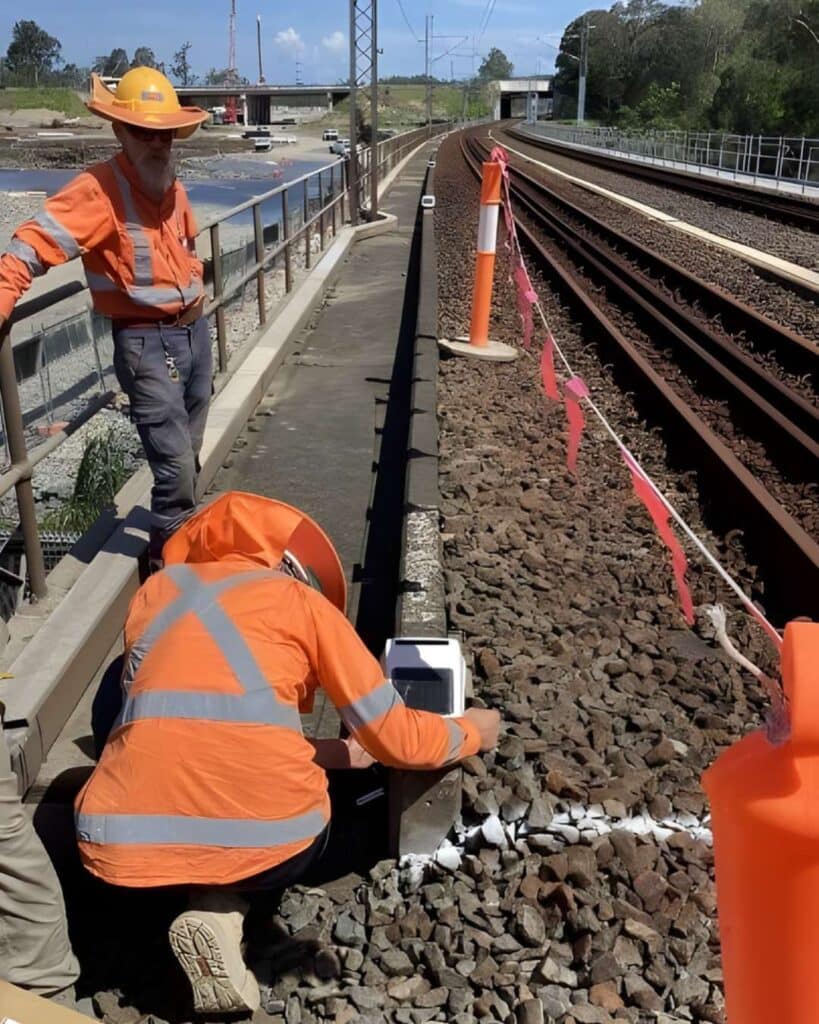
In 2024, near the North Coast railway corridor in Coomera, Australia, monitoring devices were installed during construction works adjacent to active tracks.
The system provided continuous insight into track movement, allowing teams to observe how conditions evolved during the project. This supported informed decisions around speed restrictions and operational safety.
By making this data accessible through the Parvamoti platform, teams were able to monitor remotely and respond based on measured changes rather than assumptions.
Read the full project story here.