

Two for permanence.
Locator Two
To measure is to know; understand the natural movements and detect anomalies as soon as they appear.
Locator Two is the ideal solution for permanent, autonomous 3D displacement and tilt monitoring of railways, quays, bridges, and critical infrastructure. It detects anomalies early, alerting you when action is needed and helping you prevent risks before they escalate.
Infrastructure always moves. The question is: do you know when it shouldn’t?
Every bridge, railway, and quay wall is in constant motion, expanding, contracting, and shifting under the forces of temperature, traffic, tides, wind force, and time. Most of these movements are expected. The real challenge lies in identifying the subtle deviations that signal risk.
Traditional inspections and periodic surveys offer only snapshots in time. They miss the small, early signs that can prevent costly downtime or even catastrophic failure.
This is where Locator Two steps in…

Fewer site visits
Locator Two enables remote insight into asset location and status, reducing the need for manual checks and on-site inspections. Issues can be identified faster and addressed only when action is truly needed.
Lower operational costs
By minimizing unnecessary site visits, manual labor, and unplanned downtime of the asset, Locator Two helps significantly reduce operational costs while improving efficiency across daily operations.
Lifecycle coverage
From installation and commissioning to operation and decommissioning, Locator Two provides continuous visibility throughout the entire asset lifecycle, supporting smarter decisions at every stage.
We're here to help your industry.
Locator Two is developed for autonomous, high-precision monitoring across railways, harbor quays, bridges, dams, and other critical linear assets where continuous insight into structural movement is essential for a safer working and living environment.
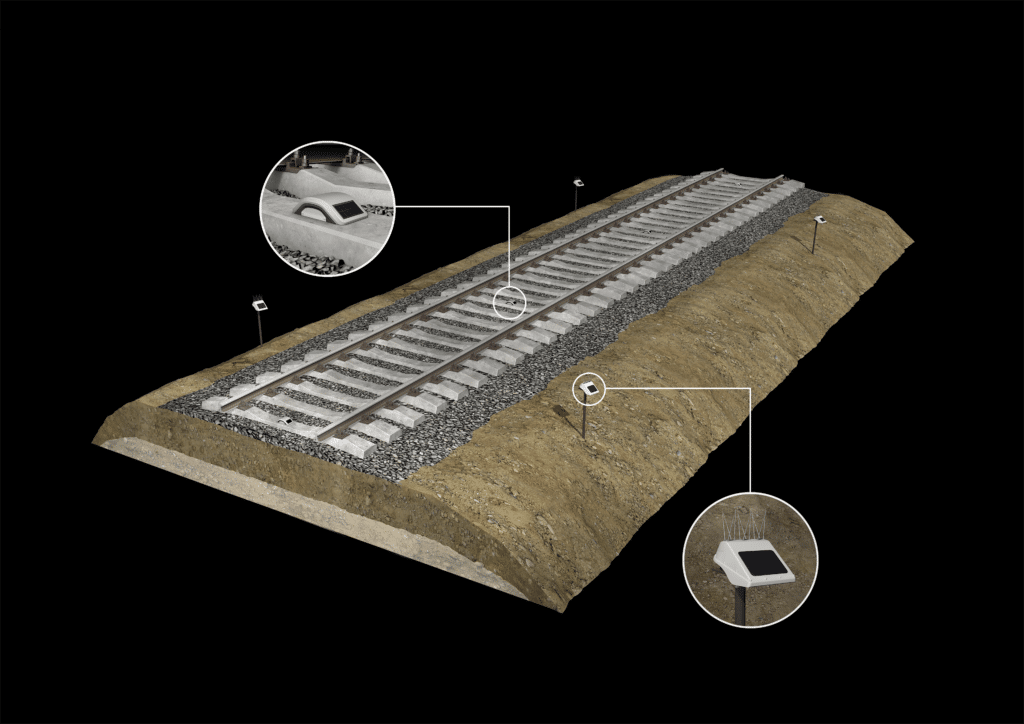
Railway Monitoring
Detect trackbed settlement, embankment movement, and structural shifts that could affect alignment or safety.
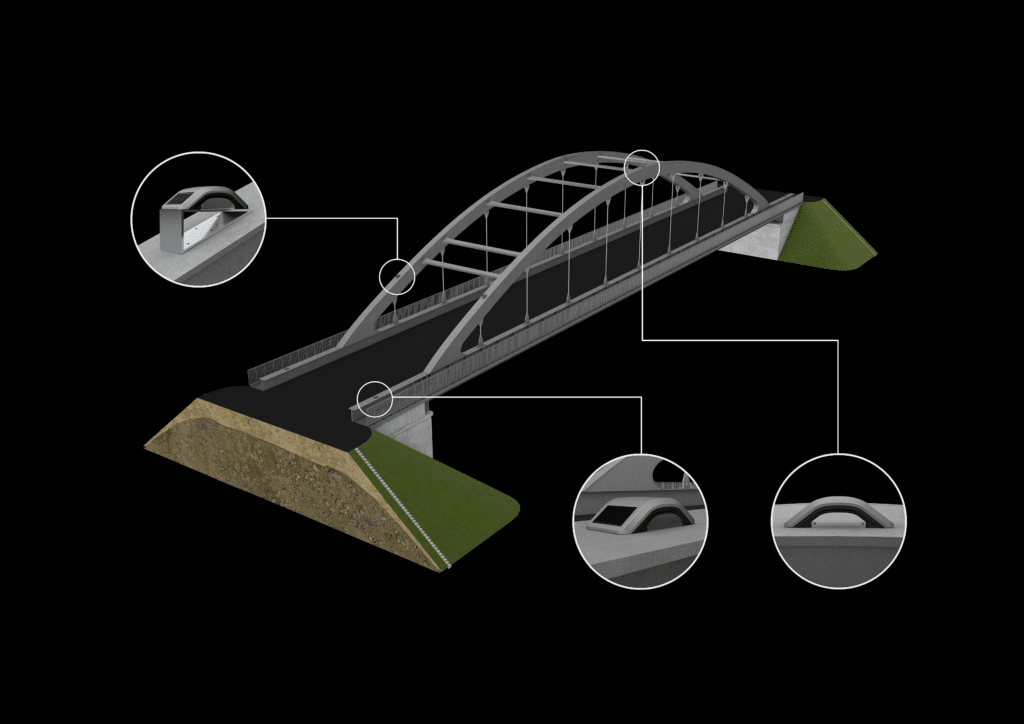
Bridge Monitoring
Monitor absolute 3D displacements and rotations to distinguish between normal thermal movement and true structural anomalies.
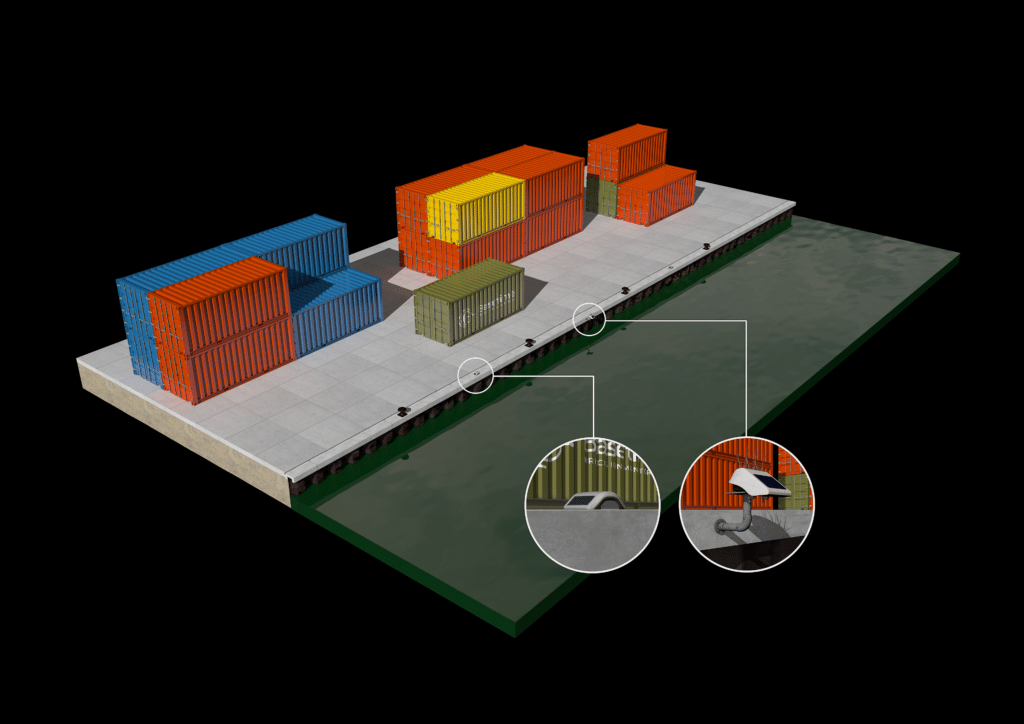
Quay Wall Monitoring
Track displacement and tilting caused by tidal forces or ground settlement to protect harbor operations.
how does locator two work?
Locator Two provides clear insights into structural movement.
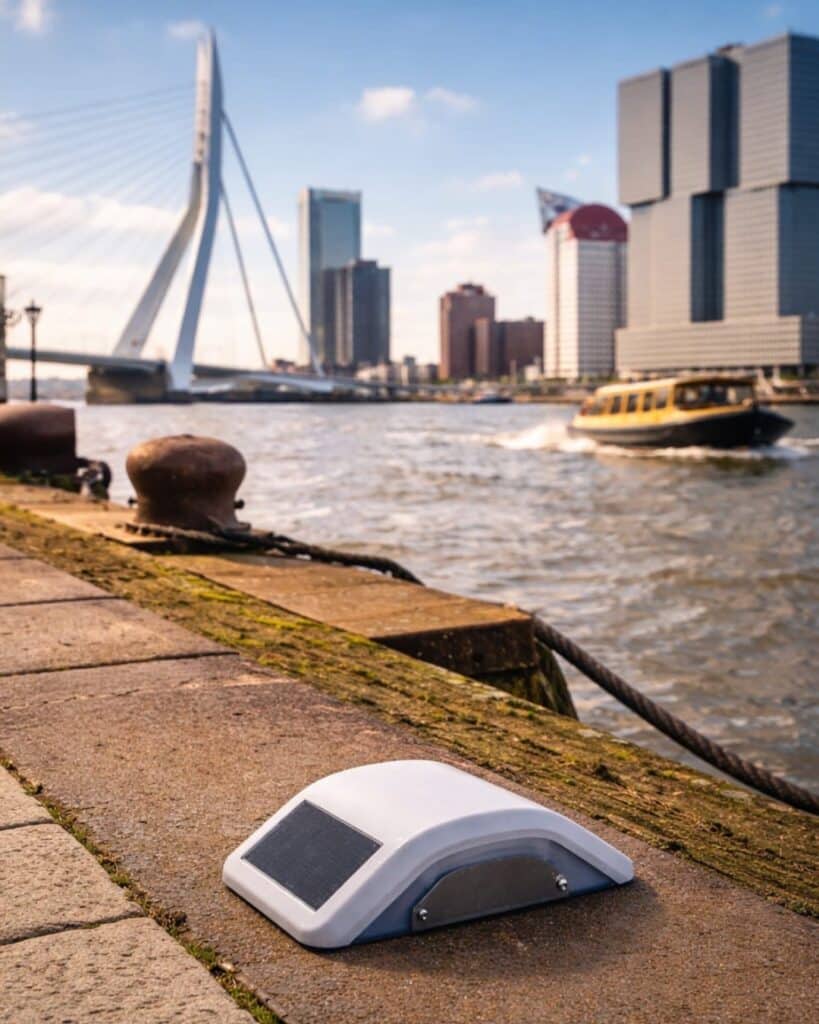
At the heart of Locator Two lies the combination of two precision technologies that together reveal the true behavior of structures over time:
GNSS for Absolute 3D Displacement
GNSS continuously measures position in three dimensions, not only how far a structure moves, but in which direction and by how much, presented in a coordinate system of your needs. Over time, it builds a complete picture of normal movement patterns caused by temperature changes, seasonal effects, and other environmental factors. When the structure behaves differently from this baseline, the anomaly is immediately visible.
3D Tilt for Rotational Insight
While GNSS shows where movement occurs by tracking position over time, tilt sensors reveal how a structure moves. They measure small changes in inclination and rotation, helping to detect early deformation or uneven settlement that can indicate the onset of a structural issue.
Measuring GNSS position up till 96 times per day and tilt up to 288 times per day, configured by yourself, you are always in control about your asset.
Full access to your monitoring data anywhere, anytime.
Together, GNSS displacement and tilt measurements provide a complete understanding of how your structures behave, across seasons, loads, and daily operations. All data is automatically transmitted to Parvamoti, the Basetime cloud platform, where it is processed into clear trends, visualizations, and alerts. Your team can review asset performance from a phone or laptop, detect anomalies early, and respond quickly, without site visits or manual data collection. When movement exceeds defined thresholds, alerts are generated so you can focus attention where it’s needed most.
Locator Two Product Specifications
| General Product Specifications |
|
| Product Weight | 1650 g (excluding box) |
| Product Dimensions |
280 x 155 x 79 mm |
| Box Dimensions | 285 x 170 x 85 mm |
| Operating Conditions | –40°C to +60°C |
| Sensors | GNSS, tilt meter, temperature and barometer |
| Connectivity | LTE-M (bands: B1, B2, B3, B4, B5, B8, B12, B13, B14, B18, B19, B20, B25, B26, B28, B66) |
| Power |
Supercapacitor – 4.2 V (air transport safe) Solar panel – 2 x 1W Charging – Solar panel or USB (with custom cable) |
| Temperature | Each measurement from –40°C to +60°C |
| Temperature resolution | 0.1° C |
| Barometer resolution | 0.1 hPa |
| Casing / material |
Outside – ASA / RAL 7047 Bracket – Stainless Steel A4 |
| Mounting | Screws, gluing |
| GNSS Specifications |
|
| Constellations & bands |
GPS, GLONASS, Galileo, BeiDou and QZSS L1C/A, L1OF, L2C, L2OF, B1I, B2I, E1B/C and E5b multi band, (184 channels) |
| Precision |
Post Processed Static (PPS): – Horizontal Precision: 2 mm + 0.5 ppm (1σ) – Vertical Precision: 4 mm + 0.5 ppm (1σ) – Long term trend-monitoring precision: <1 mm* |
| Measurement frequency | 1 to 96 times per day (configurable with the Parvamoti platform) |
| Tilt Meter Specifications | |
| Sensor | 3-axis MEMS accelerometer |
| Range | +10° (due to reliable GNSS measurement) |
| Axes | 3-axis inclination measurement with respect to gravity’s direction. Reports the two axes of rotation from the horizontal plane in any orientation |
| Resolution | 0,001° / 0.018 mm/m |
| Precision (1s) | 0,002° / 0.035 mm/m |
| Measurement frequency | 1 to 288 times per day (configurable with the Parvamoti platform) |
| * Based on comparing daily averages of at least 12 daily measurements under similar climatic (temperature) conditions. | |
Get in touch
We are ready to hear from you! Leave your details here, and your industry expert will be in touch soon.