

Bridge Monitoring at Haringvliet Bridge – Coenradie Case Study
Numansdorp, Netherlands
Project duration: Summer 2023
The Haringvliet Bridge on the A29 was constructed in the 1960s. Over time, the bridge deck, mechanical components, and technical systems required replacement. As a result, a major renovation project was initiated on behalf of Rijkswaterstaat, the Dutch national road and water authority.
This renovation ensured that the bridge remained safe, reliable, and accessible for the region, and our technology played a crucial role in monitoring the bridge during the renovation.
Locator one units
measurements per day
Minutes logging time
Monitoring of the Bridge Abutments
During the summer of 2023, the Haringvliet Bridge was closed for several weeks to carry out maintenance activities. One of the key tasks involved removing and replacing the movable section of the bridge, with the original structure weighing 1,500 tons and the new structure 2,000 tons. This operation posed a significant challenge and required precise monitoring of the remaining bridge structure, including the abutments and piers, to detect deformation and settlement.
High-precision monitoring: trend breaks detected from deviations as small as 1 mm.
Insight into environmental effects: temperature influences closely correlated with measured movements.
Risk reduction: bridge deck removal and new weight impacts clearly visible, minimizing potential damage and liability.
Throughout the project, numerous sensors were deployed to closely monitor structural behavior. Coenradie BV, an engineering firm and early adopter of the Basetime system, used the Locator One for deformation measurements during the works. Four Locator One devices were installed at the corners of the bridge abutment, with a fifth device serving as a reference station on a nearby settlement-free object.
The Locator One devices were configured remotely to perform measurements 24 times per day, providing detailed insight into bridge movements influenced by factors such as tides and temperature. The extensive dataset delivered valuable information to surveyors and engineers. Post-processing analysis enabled the calculation of daily averages, filtering out the effects of tides and temperature, and achieving deformation measurement precision of less than 1 millimeter.
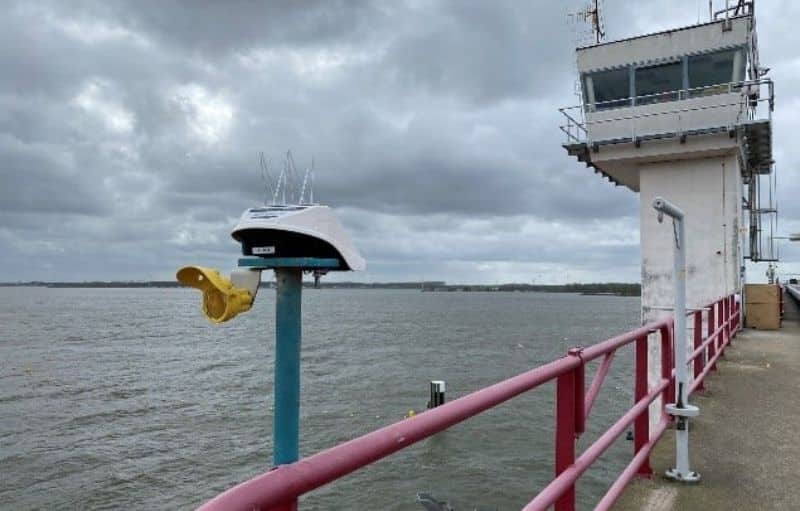
Several key observations emerged during the project execution:
– The Locator One successfully detected trends and breakpoints from changes as small as 1 millimeter.
– Long-term deformation trends closely correlated with variations in object temperature.
– The moments of bridge deck removal and replacement were clearly identifiable in the data.
The accuracy of this approach exceeded expectations. It was concluded that the Basetime system achieved significantly higher precision than originally specified when highly redundant measurements were post-processed, combining 24 daily measurements into a single daily value.
Basetime was already working to further improve accuracy and, in particular, the reliability of the results by developing a network adjustment within the computation environment for object monitoring.
“The accuracy of the chosen method has exceeded expectations, and it can be concluded that the Basetime system can be used with much higher accuracy than originally specified, provided that post-processing is applied to the highly redundant measurements.”

Data and Automation: The Basis for Predictions
Data and automation formed crucial pillars for making reliable predictions about asset behavior. Long-term information on the deformation of critical assets provided insights into their natural behavior. Deviations from expected trends served as indicators of potential issues, suggesting where further investigation was necessary.
The Locator One ensured high precision, with at least 95% of planned measurements producing reliable and accurate data.

Other Applications
Beyond bridge monitoring, the system can be applied to other critical public infrastructure, such as dams, tunnel entrances, and various other assets. The sector must embrace digitization and automation to address large-scale infrastructure challenges efficiently, sustainably, and within available resources.

Building Monitoring, Claes de Vrieselaan
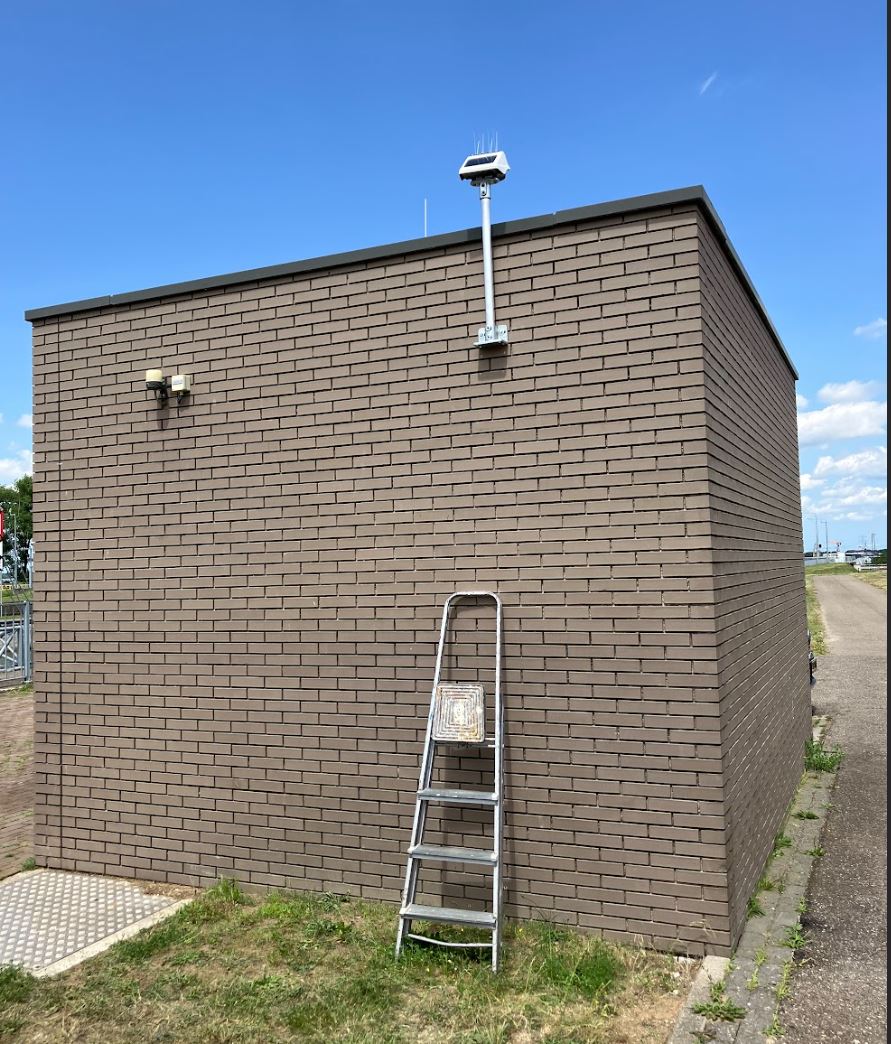
Deformation Monitoring at Maasbracht Lock, the Netherlands
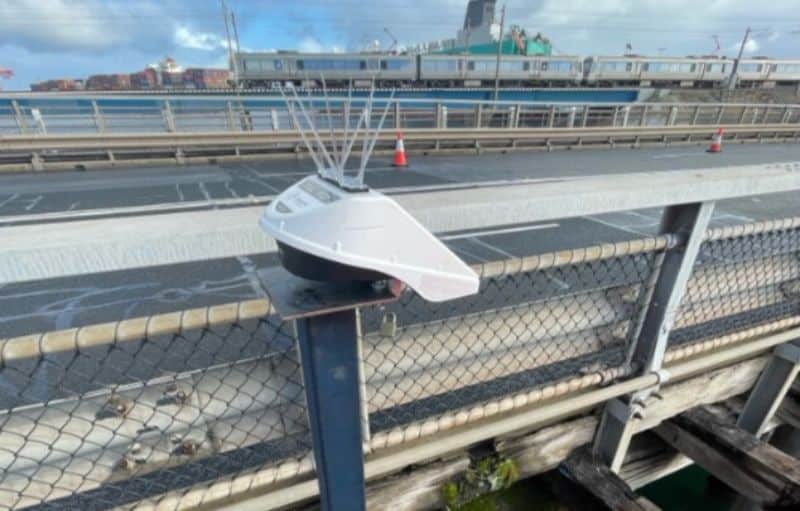
Fremantle Bridge Monitoring, Perth, Australia
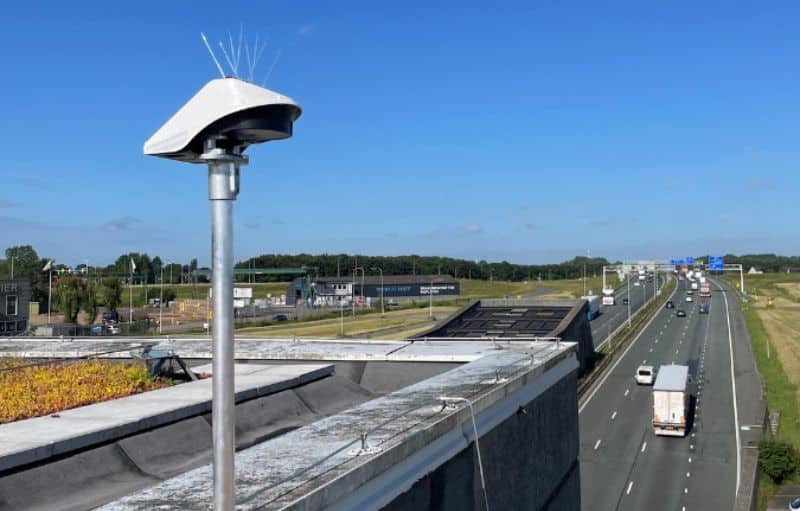
Monitoring of Tunnel Entrances – River Noord, Alblasserdam, Netherlands
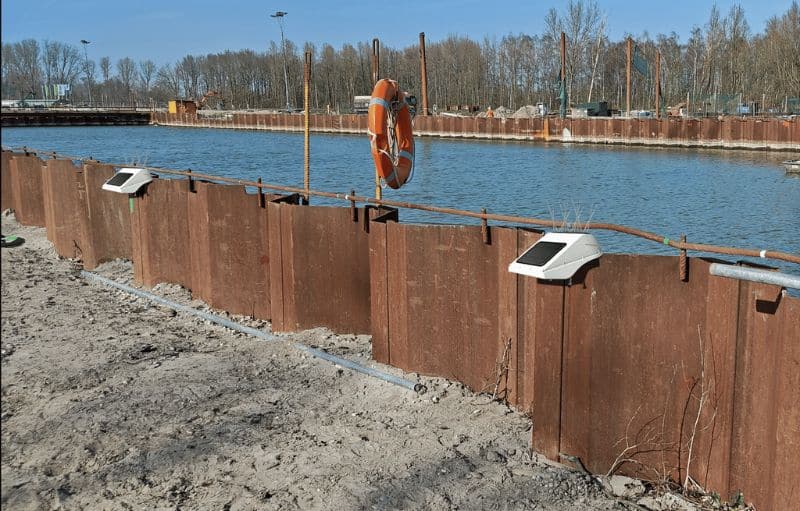
Sheet Pile Monitoring, A16 Rotterdam, NL
Get in touch
We are ready to hear from you! Leave your details here, and your industry expert will be in touch soon.